top of page
Search

was the title of my 60 second challenge at TEDxBrisbane. And I want to take a moment to reflect on that experience.


Chloe Wigg on the TEDxBrisbane stage. Image Courtesy TEDxBrisbane Official

It started with Kate Fisher the force behind Milkshakes for Marleigh.


Her daughter Marleigh has autoimmune encephalitis, the same condition my dad faces, where the immune system attacks and causes inflammation in the brain. Through that connection Kate discovered I also had an autoimmune disease and was receiving IVIG for Myasthenia Gravis. Kate invited me onto her podcast to talk about the life saving and quality of life giving benefits of blood products.


I have watched her transform some of the most devastating experiences a mother can face into a national force for blood donation advocacy. Her vital work means that every single time I needed life saving IVIG, it was there. When she sent me the link to apply to be in the TEDxBrisbane audience, I was honoured. All I wanted was to sit like a proud parent and watch her shine.


I did not expect everything that followed.


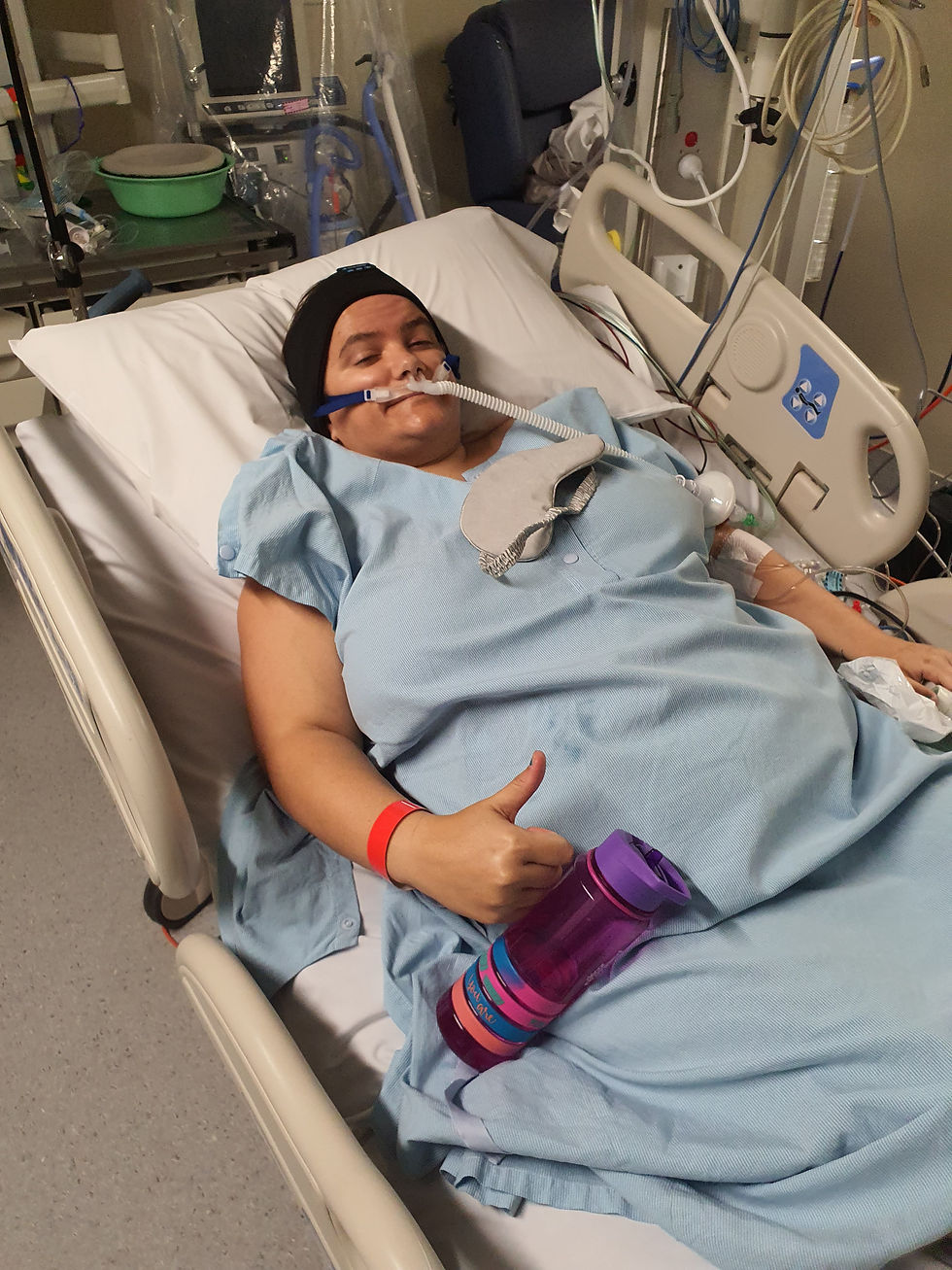
I was fresh out of hospital from another scary intensification of my disease (Thank you Australian blood donors and IVIG for saving my life yet again) when I found out I had been accepted AND had the chance to submit for the 60 second challenge.


Chloe Wigg laying in a hospital bed.

Living with a rare disease that up and tries to end you now and then, well it makes you live life differently. and everyone approaches that differently.


For me, I want the world to be a better place because I lived in it. All the medical trauma, all the scars and the near misses, it can't be for nothing. Every day that I am alive and breathing is a day gifted to me from blood donation and I will use that gift to give back.


Was this the best time to take on something. - NO


but this was an opportunity I could not let pass me by.


Not just for me, but for all those without a voice.


We escaped the world and went camping for the sole purpose of being uncontactable, where I couldn't have any medical appointments (... or work commitments.... woops) I drafted what I wanted to say in between enforced rest times, recovering from being unable to move or breathe. And recorded my submission on the side of the road, desperately trying to get one clean take between traffic noise, dog barks (thanks Duster) and, my favorite from Mr 8. "Can we go now?!?!?!?!"


I never expected to be picked.


I am not a CEO who flies planes on weekends for charity. I am not a groundbreaking researcher who found the cure for aging.


I am just me.


Just Chloe.


But what I chose to talk about was what I saw was deeply needed and timely. Something that shifted the conversation about access from a disability or"them" issue, to something we all deserve... because access is everyone's issue.


And that is what TEDxBrisbane is about. Yes how you speak matters. But your IDEA is the most important thing. It levels the playing field. Passionate people. With a big idea. In search of the right audience.

Then the TEDxBrisbane team showed why they are global leaders.


I experienced something I had never experienced before. An advocate. A volunteer contact who answered every question directly, who called and talked me through the location, the day and how everything will run. "What time are the breaks" "where are the wheelchair parks?" Simple questions, answered quickly, that make an enormous difference, especially when you have a complex health situation. Every detail was considered.


Then there was the 60 Second Challenge Team. Glen ... well Glen just gets stuff done. Everything was well planned, excellently communicated and as someone who had been the recipient of well meaning but poorly executed inclusion, Glen is the gold standard. He got me a head set mic because holding mics can be hard for me, he made sure we ran though getting on and off stage, that I wasn't going to get stuck on the carpet and that all the 60 Second Challenge finalists movements were similar so that the wheelchair was not going to feel out of place or "other".


Chloe Wigg and Glen Murphy behind the scenes checking accessibility prior to the 60 Second Challenge delivery.

Tiana worked with me to make my speech more cohesive and impactful. She was so giving with her time, knowledge and skill and is the worlds best one woman cheer squad!


Then came rehearsal night.


Chloe Wigg and Tiana Iuvale at the 60 Second Challenge rehearsal

I stood (well sat) in front of Tiana, Glen, my fellow finalists - the fantastic 4 - Gaj Panagoda, Elena Sokolova and Ingrid Devlin, TEDx Speakers Fleur Madden and Molly McCluskey ... and Juanita.


Juanita, who, until that moment I had only heard spoken of with deep respect ... and ... well ....affectionate fear.


I was expecting a dragon ... and in walked this wonderful pocket rocket of a human.


I delivered my 60 second rehearsal. Fumbled a line but finished on time. And then...


Nothing. Absolutely nothing. Her face was blank.

A million thoughts spiralled until finally I blurted out "OMG your face is giving me nothing, I need you to say something!"


"It was good."


Literally no expression.


Ok. *deep breath * I can deal with good. Good can be improve on.


We talked through pace, delivery, when to pause, how to use the clock. I took every word to heart.


What I would later learn is that Juanita is not someone who spares your feelings. If she can help you, she will, and it will be direct and matter of fact. She is a deeply kind human. And blank face?


Blank face means she is delighted.

I went home and practiced. In the shower. In the mirror. I made people make unflinching eye contact with me while I recited. I wrote down exactly what second each sentence was supposed to finish on. That might sound like too much preparation. But I had a lot to prove. Not to anyone else.


To myself.


I was not chosen for optics. I was chosen because I had an idea everyone needed to hear.

The fantastic 4. Left to right: Chloe Wigg, Ingrid Devlin, Elena Sokolova and Gaj Panagoda. Behind the scenes ready to deliver their 60 Second Challenge Idea.

Backstage we shook out our nerves.


I sang my power songs (Titanium and Pocketful of Sunshine) and reminded myself that no matter what, I am strong and I make my own happiness.


When I got on that stage I expected the shaking and the nerves. Instead I thought:


"this audience has no idea what is about to hit them."

I crossed my legs (like a lady) dusted off my dress, gave the audience a cheeky smile and ...


Chloe Wigg delivering her 60 Second Challenge Idea. Image courtesy TEDxBrisbane Official

I smashed it.


Chloe Wigg (With an "I'm very serious" face) 60SC finalist at TEDxBrisbane. Image courtesy TEDxBrisbane Official

I nailed it for me, and I nailed it for everyone who doesn't have a voice to say it. Universal design and accessibility benefit everyone.


But my favourite moment? Very few people saw it.


I got off that stage absolutely electric. Confirmed the microphone was off. And violently (and with absolutely no chill) celebrated, I whispered a few words I will not type here, triple fist pumped the air, happy stamped my feet....and froze like a deer in headlights.


Because there was Juanita.


Blank face.


I thought I was about to be told off for being unprofessional in the wings.


Then her face broke into the biggest smile and she whisper shouted "YES! YOU SMASHED IT!"
Juanita Wheeler and Chloe Wigg at TEDxBrisbane 2026. Image courtesy TEDxBrisbane Official

A double fist bump from Glen. And I floated off on a cloud (well power wheelchair but whatever)


The following photos make me so happy. They are action shots of Juanita retelling my self congratulation session back stage. It was the moment Juanita cemented herself as one of my all time favourite human beings. In a world where I am use to being "too much", and apologising for my sparkle, she celebrated it. She shouted it from the rooftops. She made me promise to never dull my shine.


Sharing that moment with my two wing women Marlisa and Sarah, that was special.


Juanita retelling the antics of back stage (with permission of course). Marlisa a little shocked, Sarah not surprised one bit and me happy to have brought so much joy through my lack of chill. Image courtesy of TEDxBrisbane Official
Image courtesy of TEDxBrisbane Official

Left to right: Marlisa Kwan, Juanita Wheeler, Chloe Wigg and Sarah Jones. Image Courtesy of TEDxBrisbane Official

TEDxBrisbane is a turning point in my life. The audience was curated with precision and intention. Every single person there seemed to be genuinely trying to make the world better.


To everyone who has reached out since, who connected, who shared their own story, thank you. You are why it mattered.


And to Kate. None of this existed without you.


Community & Heart


Being seen not for what you achieve, but for who you choose to be.

About Agape Outreach


Some organisations exist on paper. Agape Outreach exists in the early mornings, in car parks, on street corners, anywhere a vulnerable person needs to feel that someone cares. Founded on January 26th, 2009, by Theresa Mitchell, Agape began simply: Theresa could no longer walk past people on the street, so she started cooking meals in her own kitchen and handing them out.


Today, Agape is based in Tweed Heads on Recreation Street, with more than 200 volunteers and 4 employees, mostly retirees and university students with a genuine heart for people. They operate between Byron Bay and Runaway Bay, providing over 800 hot meals weekly to vulnerable people, along with a wide range of other services.


"Agape" comes from Ancient Greek and means unconditional love, a profound, sacrificial love that persists regardless of circumstance. That is exactly what they pass on, every single day.

There are no church services, no conditions, no preaching. Just love and action. Volunteers and clients from every walk of life and belief are welcome. It is, in the truest sense, unconditional.


A nomination I didn't see coming


The Agape Heart of Women Awards exist to identify and acknowledge outstanding women who demonstrate courage, passion, enthusiasm, and generosity across our community. I had no idea I was going to be nominated. I only found out once I was told it had already happened.


My first assumption was that it was for my work with Oh MG, raising awareness for the rare disease Myasthenia Gravis, uniting the community and uplift others living with it. I figured I was being recognised for something I was doing for the community

.

Then I found out who had nominated me, and I asked her: What did you say in the nomination?


Her answer stopped me in my tracks.


"Chloe I have known and worked with you for years. You have every reason to be angry with the world. Every reason to scream at the sky, be angry at the unfairness of it all. But you just don't. You are so positive and happy. You shine. And not only that, I use what precious little energy you have to help others."

She wasn't nominating me for a campaign or a cause. She nominated me for who I am and who I chose to be. That is something I had never considered.


The award I won, and why it means everything


The Heart Award: Theresa's personal discretionary award
Created by Agape founding director Theresa Mitchell, given entirely at her discretion to someone in the community living, working, and giving with incredible heart and compassion. Theresa steps back from judging the main awards because she knows so many nominees personally, and then steps forward with this one.

I didn't win Woman of the Year. I wasn't expecting to. But Theresa, who absents herself from judging because she knows so many of the nominees, creates her own special category. Her own award, given at her discretion, to someone she believes embodies extraordinary heart.


That is the award I won.


It means so much more to me. I would much rather be recognised for my heart and compassion, for my conscious, deliberate choice to live every day to the fullest and make the world better simply because I was in it.

Why this work hits close to home


I've needed time to recover and reflect on the Heart of Women Awards. And part of that reflection is being honest about something personal.


I know what it is to face the monthly question of "do we have to sell the house?" I know what it is to request food hampers, to shop at charity groceries where the best-before dates have long passed and you just cut the mouldy bits off the vegetables.


So when Theresa talks about the work Agape does, it doesn't feel distant to me. They don't just give food to people who are homeless. They help people feel seen and loved when they are at their most vulnerable. That matters enormously.


Theresa told us something that hasn't left me. She said she used to be able to help people off the streets and into homes. Now all she can do is hand out tents. The financial strain gripping our nation is causing homelessness to skyrocket, and it costs her just 60 cents to give someone a hot meal. But if she doesn't have that 60 cents, she can't give anyone a meal.


What I'm doing


I try to live by the Barefoot Investor's ethos: spend, save, give. Savings haven't been possible for a while, but I can still give. So I set up a small direct deposit once a month, the equivalent of a cup of coffee.

That one cup of coffee a month equals 10 meals for people who need them. 10 meals that wouldn't exist without it.

I encourage everyone reading this to think about whether they could do the same. A small amount, given consistently, makes a genuinely significant difference to an organisation like Agape.


Support Agape Outreach

Every dollar goes directly to providing meals and services for vulnerable people across the Northern Rivers and Gold Coast.

60c = 1 hot meal $6 = 10 meals $24 = 40 meals a month

Visit agapeoutreach.com.au to donate or find out more.


Written with gratitude for Agape Outreach, for Theresa Mitchell, and for the person who saw something in me worth nominating.


Last week, I had to prove I'm a business.


Not to a client. Not to a gallery. To the government, to access support that, as a person with a disability, I am supposed to be entitled to. Ten years into my career as a sole trader, ten years of exhibitions, artworks sold, communities built, and I had to justify my existence as a professional.


The catch? I also had to prove I'm profitable.


Here's the thing about being a disabled artist trying to run a small business: every dollar that comes in goes straight back out. Not on rent or marketing or the kinds of costs that make a business look "normal." On equipment to compensate for what my body can't do. On subcontracting the work I'm physically unable to complete myself. The business isn't failing. It's being cannibalized by the cost of my disability, and the system can't tell the difference.


And there's something else the system doesn't account for. I can only take on so many projects. There are only so many hours I can work, only so many commissions I can accept, only so much that is physically possible. That means there is only ever so much money that can come in. I don't charge people more simply because I am disabled. I don't double my rates because it takes me three times as long as the next person to achieve the same result, because that isn't how art works, and it isn't how the world works. So judging whether a sole trader is eligible for help based on how much money they're pulling in, and whether that balances against the hours worked, is deeply troubling. It assumes a level playing field that has never existed for me.


I've been asking for help since January. Four months. I've reached out to an organisation whose entire purpose is to assist people like me, and they are still arguing amongst themselves about how to classify a sole trader of ten years.


While I waited, I did a little audit of my own.


If you've spent any time around someone with a serious chronic illness or disability, you've probably heard the joke: being sick is a full-time job. I've said it myself, usually with a tired laugh.


So I decided to test it.


Over the last 13 weeks, including three weeks of holidays where I attended only one appointment, my life-preserving IVIG infusion, I tracked the hours I spent at medical appointments, in transit to them, at allied health visits, and in hospital.


260 hours. In 13 weeks.


That's 20 hours a week. A part-time job at minimum wage would earn you something. This earns me staying alive and as functional as possible.


And that number doesn't include medication administration. It doesn't include pharmacy visits or liaising with the compounding chemist. It doesn't include the time spent putting on braces, or the daily labour of managing my own body and its needs at home.


Just appointments. Just the showing up.


In those 13 weeks, there were also two hospital admissions. I want you to know that, not for sympathy, but because it is ordinary. That is simply what my life looks like.


The conversation around disability in this country, and honestly in most places, has become deeply dehumanising. People talk about what disabled people deserve as though we are a policy problem to be solved, a budget line to be trimmed, a burden to be assessed and weighed.


I want to tell you who I actually am.


I am a mother. A wife. A daughter. An artist. A friend. I make exhibitions that bring people together and chip away at isolation, and I believe in that work with everything I have. I am also someone whose body requires 20 hours a week of medical management just to keep going.


Both of those things are true at once. They don't cancel each other out. But the system seems to need me to be one or the other.


I want to talk about money, because I think it matters and people don't say it plainly enough.

I went from earning a real salary to earning nothing. My husband is wonderful, genuinely, and he has never once made me feel like his earnings are his. He says we're married, it's ours. He means it.


But there is something that happens inside you when you cannot buy a new bra without doing a mental calculation about whether you can justify it. When you want a haircut and you know you can't book the next one six weeks later the way you're supposed to, because there simply isn't enough. When the fruit of your own labour, your art, made with your hands and your vision and your discipline, gets swallowed up not by ordinary business costs but by the cost of your limitations.


That is not a partnership problem. That is a systemic one.


My art gives me a small piece of independence. It matters enormously, not just financially, but as proof to myself that I am still someone who makes things, contributes things, has value beyond what I cost. Watching that get eroded is devastating in a way that's hard to put into words.


I am exhausted.


Not in the way you are after a hard week. In the way that comes from years of fighting for recognition, for access, for the basic dignity of being seen as a whole person, while also managing a body that requires 260 hours of medical attention every three months just to keep going.


I cannot keep doing all of it. And I shouldn't have to be profitable to deserve help.

If you're reading this and you recognise something of yourself in it, the invisible hours, the impossible math, the grinding indignity of having to prove your worth to systems that were never designed with you in mind, I see you. I don't think we're alone. I just think we're very, very tired.


And I think it's time to say that out loud.


Thanks for submitting!

  • Black Facebook Icon
  • LinkedIn
  • Black Instagram Icon
bottom of page